

Can I renovate a property owned by my SMSF?
Yes, it is possible, but care is required to ensure the renovation does not breach the superannuation laws and regulations (SISA) as well as the taxation laws.
Generally, a property renovation should be undertaken by an unrelated builder.
Check your fund’s trust deed to ensure the governing rules allow the property to be renovated or does not prohibit it. There are a number of issues a self-managed super fund (SMSF) must consider when undertaking a renovation which include:
- Is the renovation going to increase the income of the SMSF property?
- Was the property purchased using a Bare Trust/ limited recourse borrowing arrangement (LRBA)?
- Is the renovation an improvement, repair or a replacement asset?
- Non arm’s length income (NALI) provisions.
- Can a SMSF trustee undertake the renovation?
Is the renovation going to increase the income of the SMSF property?
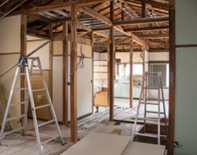 A SMSF trustee must consider maximising the fund’s income to provide for the members retirement. Like any property owner, they aim to increase property value and rental income with quality tenants. Before undertaking the renovation obtain advice from a real estate agent or a qualified property valuer and research other similar properties in the same area to find out if the capital outlaid will be commensurate with an increase in rental returns and higher capital gains in the future.
Was the property purchased using a LRBA?
A renovation cannot be funded from a LRBA. A self-managed super fund (SMSF) can pay for a renovation from other fund sources. It cannot borrow to undertake a renovation.
A repair can be funded under a LRBA but is subject to the loan agreement as often borrowing institutions do not allow a drawdown to pay for repairs.
A renovation which goes beyond an improvement and becomes a different or replacement asset will breach the LRBA rules.
Is the renovation an improvement, repair or a replacement asset?
If the renovation is restoring damage to the property without changing its original character, it may be a repair which is treated differently for tax purposes compared to an improvement. An improvement is significant and makes structural changes which adds value to the property. A repair is generally tax deductible whereas an improvement adds to the cost base of the property. A replacement asset is when the character of the property is changed.
Examples of replacement assets or improvements include:
- building a house on vacant land
- subdividing a property
- converting a residential property into a commercial property
- demolishing an existing residential house and replacing it with a commercial property or residential units
Non arm’s length income (NALI) provisions
An SMSF earning income, including capital gains on disposal of a property, which is earned as a result of a scheme where the parties are not dealing with each other at arms length can be taxed at 45%. NALI arises from:
- Income exceeding arms length expectations
- Non-arms length expenses (NALE) where expenditures are less, or nil compared to arms length dealings
Example – Luke undertakes the renovations of his SMSF residential property. He does provide construction services to the public and has the appropriate qualifications and license to do so. He wanted to save the fund money to increase the value of the property and to provide for the members retirement and does not charge for his services.
This is a scheme to provide services below market value and is NALE. As there is a direct nexus between the non-arm’s length expense and the income being derived the rental income and the eventual disposal of the property are subject to NALI and potentially taxed at 45% (n.b. capital gains is subject to the market value substitution rules and can get complicated)
Hint – Building materials cannot be supplied by a SMSF trustee or member or other related party as it is an acquisition of an asset from a related party which is prohibited even if it is paid for by the SMSF at market value.
Can a SMSF trustee undertake the renovation?
 A SMSF trustee or a director of a corporate trustee, is generally also a member of the SMSF. A SMSF trustee is prohibited from receiving remuneration for their duties or services performed in their capacity as trustee of the SMSF.
However, they can be paid for services which are not in relation to performing their duties as trustee, or director when:
- the individual is appropriately qualified and licensed
- the duties or services are part of the business the individual provides to the public
- the remuneration is at arm’s length
Hint – NALE provisions are not intended to apply to services carried out in the capacity of an SMSF trustee.